You've heard it before. Maybe you've said it yourself: "I'll catch up on sleep this weekend."
It sounds reasonable. Bank a few extra hours on Saturday. Wake up Sunday feeling restored. Debt paid.
Except that's not how sleep works.
Adenosine Clears. The Damage Doesn't.
Every hour you're awake, a molecule called adenosine builds up in your brain. It's your body's natural sleep pressure, the thing that makes you need to sleep, not just want to.
When you sleep, adenosine clears. That part resets each night.
But the downstream effects of sleep loss? Those accumulate.
One Night of Poor Sleep Triggers:
- Elevated cortisol (stress hormone)
- Increased inflammatory markers
- Impaired insulin sensitivity
- Reduced cognitive performance
- Weakened immune response
Sleep an extra two hours on Saturday, and your adenosine resets just fine. But the inflammation from Thursday night? The missed memory consolidation from Tuesday? Those don't reverse with a single long sleep.
The Research on "Recovery Sleep"
A 2019 study in Current Biology put this to the test.¹ Researchers restricted participants to 5 hours of sleep for 5 nights, then allowed 2 nights of unlimited "recovery" sleep.
The Results:
- Participants did sleep longer on recovery nights
- But metabolic dysfunction (weight gain, reduced insulin sensitivity) did not fully reverse
- When returned to normal schedules, they performed worse than baseline
The weekend catch-up created an illusion of recovery without the actual repair.
Why Prevention Beats Recovery
Your body isn't designed for sleep debt and repayment. It's designed for consistency.
The glymphatic system, your brain's waste-clearing process, only activates during deep sleep.² Miss that window, and metabolic waste accumulates. You can't run the cleaning cycle twice as long tomorrow to make up for skipping it today.
Same with memory consolidation.³ Sleep is when your brain moves information from short-term to long-term storage. Skip the process, and the data doesn't just wait, some of it is lost.
This is why chronic under-sleepers often feel "fine" while their cognitive performance, metabolic health, and immune function quietly decline. The damage is invisible until it isn't.
What Actually Works
1. Protect Sleep Before You Lose It
The goal isn't recovery. It's not needing to recover.
2. Support Natural Sleep Pressure
Adenosine is your body's built-in sleep signal. Work with it, not against it. Caffeine blocks adenosine receptors, which is why afternoon coffee can wreck your night even if you feel fine at 10pm.
3. Avoid the Tolerance Trap
Melatonin helps some people initially, but receptors desensitize after about 30 days of regular use. You end up needing more for the same effect, or switching to something else entirely.
4. Use Compounds That Support Sleep Architecture Without Dependency
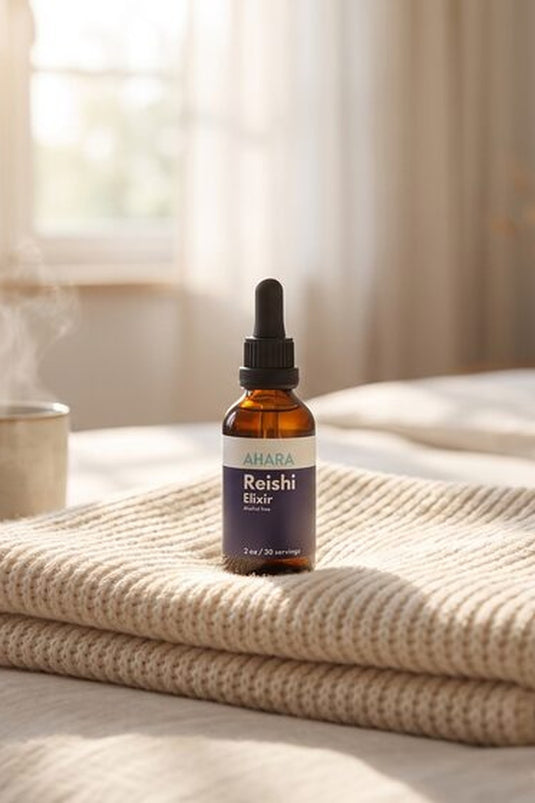
Reishi mushroom contains naturally occurring adenosine and works through multiple pathways (GABAergic calming, stress response, inflammation modulation) without creating tolerance.⁴ It supports your body's sleep systems rather than overriding them.
The Bottom Line
You can't outsmart sleep biology. The weekend catch-up is a myth that lets us justify weeknight neglect.
The real fix is boring: consistent, adequate sleep most nights. Not perfect, just consistent.
And when life gets in the way (because it will), support your sleep systems with compounds that work with your biology, not against it.
Prevention beats recovery. Every time.
---
Support Your Natural Sleep Pressure
Our Reishi Elixir delivers naturally occurring adenosine to support healthy sleep cycles, without tolerance or dependency.
✓ Alcohol-free extraction preserves adenosine content
✓ Non-habit forming for long-term use
---
References
- Depner CM, et al. Ad libitum Weekend Recovery Sleep Fails to Prevent Metabolic Dysregulation during a Repeating Pattern of Insufficient Sleep and Weekend Recovery Sleep. Current Biology. 2019;29(6):957-967.
- Xie L, et al. Sleep drives metabolite clearance from the adult brain. Science. 2013;342(6156):373-377.
- Walker MP. The role of sleep in cognition and emotion. Annals of the New York Academy of Sciences. 2009;1156:168-197.
- Porkka-Heiskanen T, Kalinchuk AV. Adenosine, energy metabolism and sleep homeostasis. Sleep Medicine Reviews. 2011;15(2):123-135.
Note: This information is for educational purposes. If you're experiencing chronic sleep issues, please consult with a healthcare professional for personalized guidance.
Related reading: How Reishi Supports Sleep: Scientific Insights and Why Melatonin Stops Working After 30 Days