You're worn out by ten, but the second your head hits the pillow your brain starts filing through tomorrow. The meeting, the email you forgot, the thing you said at lunch.
It's a maddening kind of tired, wired and drained at the same time. Pushing harder to fall asleep only turns the volume up, and it isn't your fault.
- Reishi is a calming mushroom, not a sedative and not a timing signal.
- It works on the wired-but-tired feeling instead of trying to knock you out.
- Some people feel less keyed up the first night or two; give it a fair two weeks.
- A liquid extract held under the tongue absorbs faster than a capsule your stomach has to break down first.
Does reishi help you sleep?
You don't need to knock yourself out. You need to help a busy body downshift and give it something made for calm, not for force.
Start with the drops, add a few small habits, and give the whole routine a fair run of about two weeks.
Why a racing mind won't switch off at night
Here's the frustrating part. The harder you lie there ordering yourself to sleep, the more awake you get.
Cleveland Clinic describes the loop well. When your mind is racing at bedtime, chasing sleep tends to push it further away, because the effort itself keeps you alert.
A sleeping pill can club you into unconsciousness, but it doesn't touch the wound-up feeling that started the loop. You wake up foggy and the racing is right there again the next night.
This is usually the feeling people are fighting:
- Wired but tired, drained all evening then wide awake the moment you lie down.
- A mind that won't shut off no matter how heavy your body feels.
- Replaying today and pre-playing tomorrow on a loop you can't step out of.
- The clock creeping past midnight while you do the math on how little sleep is left.
What is reishi mushroom?
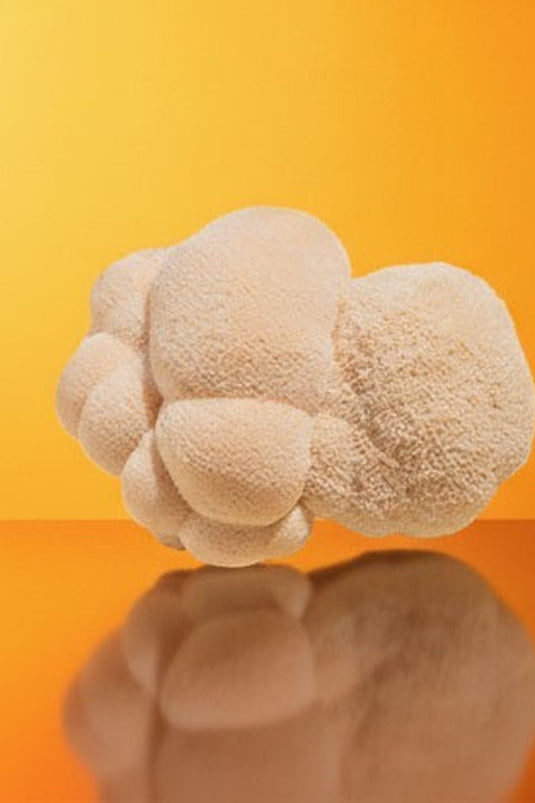
Before you take anything, it helps to know what reishi even is. It's a big, woody mushroom that people across East Asia have used for centuries, long before it turned up on wellness shelves.
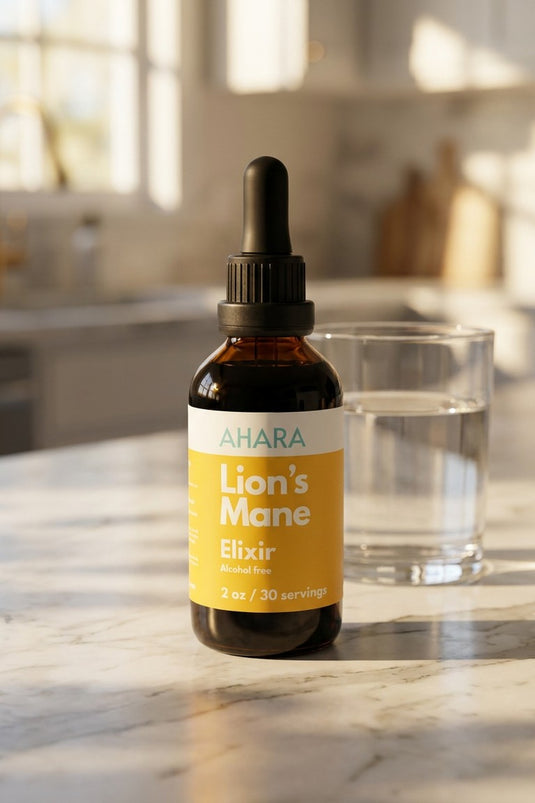
You don't cook it and eat it like a portobello. It's too tough and too bitter for that, so it's dried and turned into an extract you take in small amounts. AHARA makes it into an alcohol-free liquid, the Reishi Elixir, that you take under the tongue.

Does reishi make you sleepy?
Reishi is one of the oldest calming mushrooms people have reached for, and it works nothing like a sleeping pill.
It's about feeling settled instead of feeling switched off. Not a sedative, not a timing signal, just less keyed up so a tired body can finally let go.
- What it is: a calm, alcohol-free liquid extract for a mind that won't quit.
- What it isn't: a sleeping pill, a sedative, or a knockout drop.
- Some people feel less keyed up the first night or two.
- Give it a fair run of about two weeks before you decide.
How much reishi to take for sleep, and when
The routine matters as much as the drops. You're teaching a wired body that the day is done, so keep it steady.
Same two droppers, same time, same wind-down every night, weekends included. A few basic sleep habits give the drops something to work with, and if you want the fuller picture, here's how to sleep better naturally.
How long does reishi take to work for sleep?
Reishi isn't a knockout pill, so don't wait for it to drop you like one. What it does is quieter than that.
Some people notice the edge coming off the first night or two, like they're a little less wound up at bedtime. For others it takes longer, so give it a fair run of about two weeks before you decide either way.
Here's a rough sense of how it tends to go:
- Night one or two: some people feel a little less wound up when they lie down.
- The first week: the wind-down starts to feel more like a habit than a chore.
- Around two weeks: you get a real read on whether it fits you.
- What settled feels like: not drugged, just less busy in the head.
Reishi side effects, and who should avoid it
Reishi isn't the answer to every sleep problem, and it's worth being straight about that.
It fits the wired-but-tired crowd. The racing mind, the person who wakes at 3am with their brain already going. It's a lot less useful when the real trouble is a shifted clock, like jet lag, where your body just needs to catch up to a new time zone. Cleveland Clinic explains that jet lag is your body clock out of sync with where you've landed, which is a timing problem, not a wound-up one.
It's also not the right call when something bigger is going on. Loud snoring, gasping awake, or trouble sleeping most nights for months is a conversation with a doctor, not a bottle of drops.
Reishi tends to fit if:
- You're wired but tired, worn out yet wide awake at lights-out.
- Your head keeps replaying today and pre-playing tomorrow.
- You wake around 3am and can't get back down.
How to set up your bedroom for better sleep
Your room can pull you toward sleep or quietly hold you awake. The good news is you only have to set it up once.
Cool, dark, and quiet is pretty much the whole recipe. Get those right and the room does half the work for you.
- Cool: keep it on the cool side so your body can settle.
- Dark: heavy curtains or a sleep mask, and cover the little glowing lights.
- Quiet: silence, or steady sound like a fan to smooth over the spikes.
- Clear: tidy enough that the room reads as rest, not a to-do list.
What compounds in reishi help you sleep?
Reishi isn't one active ingredient. It's a whole mix of compounds, and a few of them line up neatly with feeling calm at night.
One is adenosine, the same molecule your body builds up all day to make you sleepy. Reishi also carries oleamide and a family of compounds called ganoderic acids, and those are tied to that settled, less-wired feeling rather than a knockout.
We've gone deeper on how adenosine drives your sleep pressure and how oleamide fits the calm-down signal if you want the fuller picture.
Here's the part no other brand can show you. AHARA had its extract mapped by a leading metabolomics lab in Japan, and the analysis turned up over 2,000 metabolites inside the liquid. You can browse them in our metabolite encyclopedia, which is a lot more than a rebottled bulk powder will ever tell you about what you're actually swallowing.
What a 30-day study of the AHARA Reishi Elixir showed
AHARA ran a 30-day observational study on the Reishi Elixir and tracked sleep with the Pittsburgh Sleep Quality Index. It's a before-and-after look rather than a big randomized trial, and it's worth reading in that light.
Over the month, the time it took people to fall asleep dropped from about 65 minutes to 22. Eighty-five percent saw a meaningful improvement in their sleep quality, and no one needed a bigger dose as the weeks went on.
That's the study. Your own nights are individual, so some people feel less keyed up the first night or two and others take a couple of weeks to know.
Reishi vs melatonin for sleep
A lot of people land on reishi because melatonin quit on them. The first few nights it seemed to help, then it faded.
Melatonin is a timing signal, not a calming one. It tells your body what time it is, so it can nudge a shifted clock, but it does little for a mind that is wound up and racing at midnight.
Reishi works on the other problem. It is about feeling less keyed up so a tired body can let go, which is why people reach for it when the trouble is a busy head, not a broken clock. Here's the fuller reishi vs melatonin breakdown.
The short version:
- Melatonin: a timing signal, best for a shifted clock like jet lag.
- Reishi: a calming extract, best for a wired-but-tired, racing mind.
- Melatonin leaves some people groggy the next morning.
- Reishi is not a sedative, so most people say they feel settled, not drugged.
How the AHARA Reishi Elixir is different from the usual sleep aids
Most mushroom supplements start the same way. A bulk extract bought from a supplier and rebottled. AHARA is built the other way around.
| Most brands | AHARA | |
|---|---|---|
| Source | Bulk extract bought from a supplier | Grown organic in Rockville, Maryland |
| Form | Capsule or a high-alcohol tincture | Alcohol-free liquid extract |
| Testing | A “pass” sheet, no real numbers | Lab-tested with real measured actives |
| Transparency | You rarely see what's inside | Over 2,000 compounds mapped and published |

AHARA Reishi Elixir
Alcohol-free liquid extract for a mind that won't settle. Two droppers under the tongue about thirty minutes before bed. Organic, grown in Rockville, Maryland.
Shop ReishiFrequently asked questions
Does reishi mushroom help you sleep?
Reishi is a calming mushroom, so it helps a wound-up mind settle rather than forcing you under like a sedative. It's best for the wired-but-tired feeling, when your body is done but your head keeps running.
How do you take reishi for sleep?
Take two droppers under the tongue about thirty minutes before bed. Hold it there for a few seconds so it absorbs, then swallow. Take it at the same time each night, even on weekends, so a wound-up body learns the day is over.
How long does reishi take to work for sleep?
Some people feel less keyed up the first night or two. If a couple of weeks alongside a real wind-down changes nothing, it's probably not for you.
Is reishi a sedative?
No, reishi isn't a sedative. It works on the keyed-up feeling instead of knocking you out, so most people say they feel settled rather than drugged. That's why it fits a racing mind better than a knockout pill does.
Does reishi help you stay asleep or just fall asleep?
It is mainly aimed at the wound-up feeling that keeps you from settling, so most people notice the wind-down first. In the 30-day observational study, nighttime awakenings also dropped, from about 3.4 a night to 1.1.
Reishi vs melatonin for sleep, which is better?
They fix different problems. Melatonin is a timing signal for a shifted clock, like jet lag, while reishi is a calming extract for a wired-but-tired, racing mind. If your nights are a busy head rather than a clock that is off, reishi is the closer match.
Is it safe to take reishi every night?
Reishi is a food-grade mushroom people have taken daily for a long time. It is not a sedative and it is not habit-forming, so a nightly two-dropper routine is how it is meant to be used. If you are pregnant, nursing, or on medication, check with your doctor first.
What time should I take reishi for sleep?
About thirty minutes before bed. Take two droppers under the tongue, hold for a few seconds so it absorbs, then swallow, and keep it at the same time each night so a wound-up body learns the day is over.
The bottom line
If your nights are a racing mind rather than a broken clock, a knockout pill was never the right tool. Reishi works on the settling-down part, which is exactly where the trouble is.
Take your two droppers, build a real wind-down around them, give it a fair two weeks, and see how bedtime feels.
- Cleveland Clinic. When Your Mind Is Racing at Bedtime, Try These Tactics.
- Cleveland Clinic. Sleep Hygiene: 8 Tips To Improve Your Sleep.
- Johns Hopkins Medicine. Seven Ways to Get a Healthier Night's Sleep.
- Cleveland Clinic. Jet Lag: What It Is, Symptoms, Treatment & Prevention.
These statements have not been evaluated by the Food and Drug Administration. This product is not intended to diagnose, treat, cure, or prevent any disease.