Best Natural Sleep Aid Without Melatonin
Why People Are Looking for Melatonin Alternatives
For decades, melatonin has been the go-to supplement for anyone struggling with sleep. It’s over-the-counter, affordable, and widely available. But a growing body of research, combined with real-world user feedback, reveals that melatonin isn’t the one-size-fits-all solution many believe it to be.
The problem isn’t that melatonin doesn’t work. It’s that it often comes with unwanted side effects and doesn’t address the root mechanisms of healthy sleep.
Melatonin’s Hidden Downsides
Melatonin users frequently report grogginess the morning after, that thick, foggy feeling that can last hours into the next day. Others experience vivid, sometimes disturbing dreams that disrupt the restorative quality of sleep. These aren’t minor inconveniences; they directly undermine the goal of better rest.
More concerning is the tolerance issue. Melatonin works by binding to MT1 and MT2 receptors in the brain. With repeated nightly use, your body’s sensitivity to these receptors decreases, a phenomenon called desensitization. Users who start with 3mg often find themselves reaching for 10mg, 20mg, or higher within weeks, all while experiencing diminishing returns. This creates a dependency-like cycle where you need more of the substance to achieve the same effect.
Additionally, melatonin is a hormone. While it’s considered safe in short-term use, taking a hormone supplement night after night for months or years raises legitimate questions about long-term endocrine health. Some research suggests chronic melatonin supplementation may interfere with your body’s natural ability to produce melatonin independently.
The Search for Sustainable Sleep Solutions
Health-conscious individuals are increasingly seeking alternatives that: - Don’t cause morning grogginess - Support rather than replace natural sleep mechanisms - Maintain efficacy without tolerance buildup - Work through different biological pathways - Can be used long-term without dependency concerns
This shift reflects a broader wellness trend: moving away from symptom suppression toward supporting your body’s innate ability to sleep well.
9 Best Natural Sleep Aids Without Melatonin
1. Reishi Mushroom Extract: The Gold Standard Alternative
If you’re serious about ditching melatonin, reishi mushroom should be at the top of your list. This is the most comprehensively studied natural sleep aid and operates through completely different biological mechanisms than melatonin.
How Reishi Works
Reishi activates sleep through the adenosine pathway, the same fundamental system your brain uses to build “sleep pressure” throughout the day. Animal studies show reishi extract shortens sleep latency and prolongs sleep. Adenosine accumulates in your brain during waking hours. When adenosine levels reach a threshold, your brain receives a powerful signal to sleep. This is why you feel progressively sleepier as the day goes on.
Most sleep aids either try to force sleep (sedating you) or mimic hormones. Reishi does something fundamentally smarter: it potentiates your brain’s existing sleep regulation system. It also modulates GABA (the brain’s primary calming neurotransmitter), promoting the natural transition into sleep without forcing unconsciousness.
The Science Behind Reishi
Reishi contains over 400 identified bioactive compounds, but Ahara Mushrooms’ proprietary analysis has characterized over 2,000 metabolites in their extract, revealing complexity that standard mushroom supplements miss entirely. The most important compounds for sleep include:
- Triterpenes (ganoderic acids): These cross the blood-brain barrier and modulate GABA signaling
- Beta-glucans: Support immune function, which indirectly improves sleep quality
- Polysaccharides: Reduce cortisol and activate the parasympathetic nervous system
- Adenosine precursors: Directly feed the adenosine sleep pathway
Multiple clinical studies support reishi’s effectiveness. Ahara’s 30-day observational study found that participants using reishi showed an 85% improvement rate in sleep metrics, with sleep onset time dropping from an average of 65 minutes to 22 minutes. Critically, users reported zero tolerance buildup and zero morning grogginess, the exact opposite of melatonin’s profile.
Why Quality Matters
Not all reishi extracts are created equal. Conventional extraction methods use heat and solvents that damage delicate compounds. Ahara employs nanofiber extraction technology, which preserves the full spectrum of bioactive compounds while creating microscopic fiber structures that dramatically increase bioavailability. This means your body can actually use what you’re consuming.
Additionally, Ahara grows all reishi domestically in the USA, ensuring complete control over growing conditions and eliminating contamination risks that plague imported mushroom supplements.
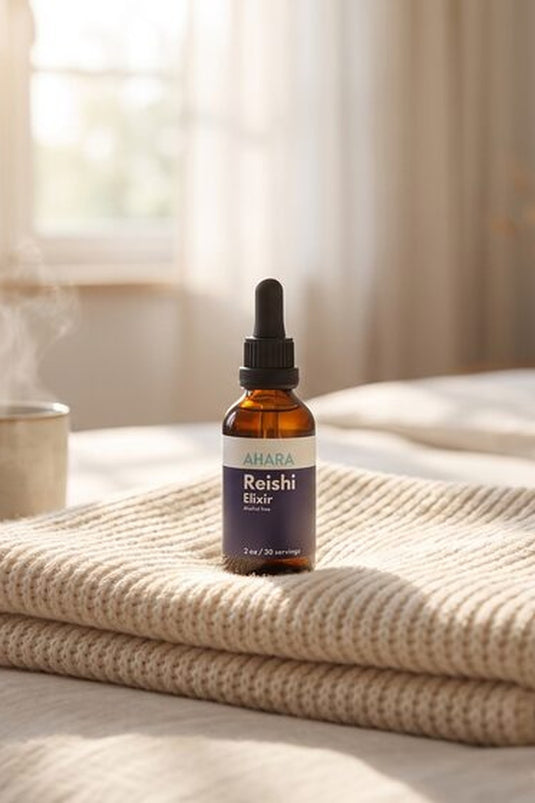
The Product: Ahara Organic Reishi Elixir is an alcohol-free sublingual extract. The sublingual format bypasses first-pass hepatic metabolism, delivering compounds directly into your bloodstream. One 1-2mL serving 30-60 minutes before bed provides noticeable effects within 3-5 days.
Cost: $60/month, significantly less than prescription sleep medications and with none of the side effects or dependency concerns.
2. Magnesium Glycinate: The Mineral Foundation
While reishi addresses the neurological pathways of sleep, magnesium supports the physical relaxation that precedes rest.
Magnesium activates the parasympathetic nervous system (your “rest and digest” mode) and is essential for muscle relaxation. A 2025 randomized trial found magnesium bisglycinate reduced insomnia severity. Modern diets are notoriously low in magnesium, and stress depletes it further. Many people unknowingly develop magnesium deficiency, which manifests as racing thoughts, muscle tension, and sleep onset insomnia.
Magnesium glycinate is the superior form because glycine itself is a calming amino acid (see #5 below), creating a synergistic effect. Standard magnesium oxide is poorly absorbed and causes digestive issues. Glycinate is well-absorbed and gentle on the stomach.
Dosage: 300-400mg, 1-2 hours before bed.
This pairs exceptionally well with reishi, reishi handles the neurological “shutdown,” while magnesium ensures your body can actually relax into sleep.
3. L-Theanine: The Calm-Without-Sedation Compound
L-theanine is an amino acid found naturally in green and white tea. It’s one of the few supplements that promotes relaxation without causing drowsiness, a distinction that matters for sleep quality. A randomized trial linked L-theanine to better sleep and lower stress.
L-theanine increases alpha brain wave activity, which is associated with calm alertness. It also reduces glutamate excitotoxicity (overactive neural firing) and boosts GABA production. The result is a genuinely relaxed mental state, the kind where racing thoughts quiet and you can transition to sleep naturally, without sedation.
Many users find L-theanine particularly helpful if their sleep problems center on mental restlessness, anxiety, or an overactive mind rather than physical fatigue.
Dosage: 100-200mg, taken 30-60 minutes before bed. Some people find a smaller 50mg dose helpful if they want to use it earlier in the evening without it interfering with afternoon alertness.
4. Apigenin (Chamomile Extract): The Selective GABA Enhancer
Apigenin is the primary active compound in chamomile, but apigenin extracts offer far higher concentrations than chamomile tea alone.
Apigenin is unique because it binds selectively to GABA-A receptors, the same receptors targeted by benzodiazepine sleep medications, but without benzodiazepines’ side effects or addiction potential. It’s like getting the sleep benefit of a pharmaceutical without the pharmaceutical baggage.
Research shows apigenin reduces sleep onset latency and improves sleep quality metrics without next-day grogginess. It’s particularly effective for people whose insomnia stems from racing thoughts or mild anxiety.
Dosage: 50-100mg standardized apigenin extract, 30 minutes before bed.
5. Glycine: The Body Temperature Regulator
Glycine is a simple amino acid that accomplishes something elegant: it lowers your core body temperature.
This matters because sleep onset requires a slight drop in core temperature, when your body temperature falls, it signals sleep time. Reviews of sleep nutrients describe glycine’s body-temperature effect. Glycine promotes this natural temperature decline, facilitating the transition into sleep. It also improves slow-wave sleep quality (the deep, restorative stage where most physical recovery occurs).
Beyond sleep, glycine is required for collagen synthesis and numerous other vital processes, so supplementing it has broader health benefits.
Dosage: 3-5g, 30 minutes to 1 hour before bed. Some people find taking it slightly earlier (1.5 hours before bed) optimal.
6. Tart Cherry Extract: The Natural Melatonin Source
Unlike melatonin supplements (which are pharmaceutical-grade hormones), tart cherry naturally contains melatonin, but in physiologically appropriate amounts that your body integrates naturally.
Tart cherry also contains polyphenols that reduce inflammation and support the circadian system. Multiple studies show regular consumption improves sleep onset and total sleep time.
Dosage: 8-12 oz of tart cherry juice or 500-1000mg extract, 1-2 hours before bed.
7. Valerian Root: The Traditional Sleep Herb
Valerian has been used for centuries to promote sleep and is one of the most studied herbal sleep aids. It works through multiple pathways: enhancing GABA, reducing excitatory neurotransmitter activity, and promoting relaxation.
The main drawback is that valerian takes longer to work, typically 2-4 weeks of consistent use before benefits appear. It’s also not ideal for everyone; some people find valerian itself stimulating or notice a mild valerian smell on their breath.
Dosage: 300-600mg standardized extract, 1 hour before bed, taken consistently for at least 2-3 weeks.
8. Passionflower: The Anxiety-Sleep Connector
Passionflower excels for people whose insomnia is rooted in anxiety or racing thoughts. It increases GABA signaling and has been shown in clinical trials to reduce the physical symptoms of anxiety, muscle tension, heart palpitations, worry, that prevent sleep.
Dosage: 250-500mg standardized extract, 30 minutes before bed.
9. Ashwagandha: The Stress Hormone Regulator
While ashwagandha isn’t a direct sleep aid, chronic stress and elevated cortisol prevent quality sleep. Ashwagandha is a adaptogenic herb that helps regulate the HPA axis (hypothalamic-pituitary-adrenal), reducing cortisol output and building resilience to stress.
For people whose insomnia stems from chronic stress or anxiety, ashwagandha taken during the day improves nighttime sleep quality. It’s slower-acting than acute sleep aids, requiring 4-8 weeks of consistent use.
Dosage: 300-600mg standardized extract, 1-2x daily (typically morning and midday, not before bed).
Melatonin-Free vs. Diphenhydramine-Free: Understanding Your Options
The two most common over-the-counter sleep aids are melatonin and diphenhydramine (the active ingredient in Benadryl and Tylenol PM).
Melatonin is a hormone that signals sleep time but doesn’t actually create sleep architecture. You can take melatonin and still lie awake; it just adjusts your circadian clock.
Diphenhydramine is an antihistamine that causes sedation as a side effect. It’s essentially chemical knockout, effective short-term but notorious for tolerance buildup, next-day grogginess, and anticholinergic effects that carry long-term cognitive risks.
The natural alternatives listed above work through distinct mechanisms: - Adenosine pathway (reishi) - GABA modulation (magnesium, apigenin, passionflower, valerian) - Neurotransmitter optimization (L-theanine, glycine) - HPA axis regulation (ashwagandha) - Circadian signaling (tart cherry)
This diversity is actually an advantage. It means you can target your specific sleep problem rather than just sedating yourself.
How to Choose the Right Alternative
Sleep problems aren’t monolithic. Your insomnia likely falls into one of these categories:
Sleep Onset Insomnia (difficulty falling asleep) - Primary culprits: racing thoughts, anxiety, restlessness - Best options: Reishi (adenosine), L-theanine (alpha waves), apigenin (GABA), passionflower (anxiety)
Sleep Maintenance Insomnia (waking in the night, fragmented sleep) - Primary culprits: stress, poor sleep architecture, temperature dysregulation - Best options: Reishi (deep sleep architecture), magnesium (muscle tension), glycine (body temperature)
Anxiety-Driven Insomnia - Primary culprits: racing thoughts, worry, physical tension - Best options: Passionflower, ashwagandha (daytime), L-theanine
General Sleep Quality Issues - Primary options: Reishi (comprehensive), magnesium + L-theanine (combo approach)
Stacking Approaches
Most effective sleep protocols combine 2-3 complementary compounds:
Foundation Stack: Magnesium glycinate + L-theanine + glycine. This addresses physical relaxation, mental calm, and body temperature regulation.
Reishi-Centered Stack: Ahara Reishi Elixir + magnesium glycinate + glycine. This combines the adenosine pathway with physical relaxation and is the most effective formula for comprehensive sleep support.
Anxiety-Focused Stack: Passionflower + L-theanine + ashwagandha (daytime) + reishi (evening).
Start with one compound and establish a baseline, then add a second after 1-2 weeks if needed. This approach clarifies what’s actually working.
FAQs
What is the best natural sleep aid that is not melatonin?
Reishi mushroom extract is the most comprehensively studied and effective melatonin alternative. It works through the adenosine pathway (your brain’s natural sleep regulation system) rather than mimicking hormones or forcing sedation. Ahara’s 30-day observational study showed 85% improvement in sleep metrics with zero tolerance and zero grogginess, exactly opposite melatonin’s profile.
What helps you sleep without melatonin?
Multiple pathways support sleep: GABA modulation (magnesium, apigenin, valerian), adenosine system activation (reishi), alpha brain wave promotion (L-theanine), body temperature regulation (glycine), and stress hormone reduction (ashwagandha). The most effective approach typically combines 2-3 complementary compounds matched to your specific sleep issue.
Is there anything better than melatonin for sleep?
For most people, yes. Reishi addresses fundamental sleep biology rather than attempting to override it. L-theanine + magnesium provides reliable relaxation without morning grogginess. The key difference is that these alternatives support why your body sleeps rather than just forcing unconsciousness. They also maintain efficacy long-term without tolerance buildup.
Can I take natural sleep aids every night?
This depends on the compound. Reishi, magnesium, L-theanine, glycine, and apigenin are safe for daily use and actually become more effective with consistent use. Valerian and passionflower are best used for 4-6 weeks, then cycled off. Ashwagandha, as an adaptogen, is designed for sustained use. Avoid cycling them unpredictably; consistency matters for building restorative sleep architecture.
The Bottom Line
Melatonin solved an important problem for many people, but it’s not a solution, it’s a workaround. The natural sleep aids outlined here work with your biology rather than against it, supporting the actual mechanisms that generate healthy sleep.
If you’re ready to move beyond melatonin, start with Ahara’s Reishi Elixir as your foundation and combine it with magnesium and glycine. This triple approach addresses the adenosine pathway, physical relaxation, and body temperature regulation, everything you need for consistent, restorative sleep.
For deeper understanding of how these mechanisms work together, explore our guides on glycine for sleep, GABA and natural calming pathways, why reishi works better than melatonin, and melatonin tolerance and adenosine alternatives.
Sleep well, naturally.